Déjà Vu
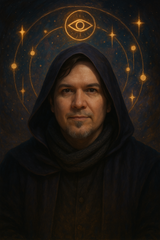
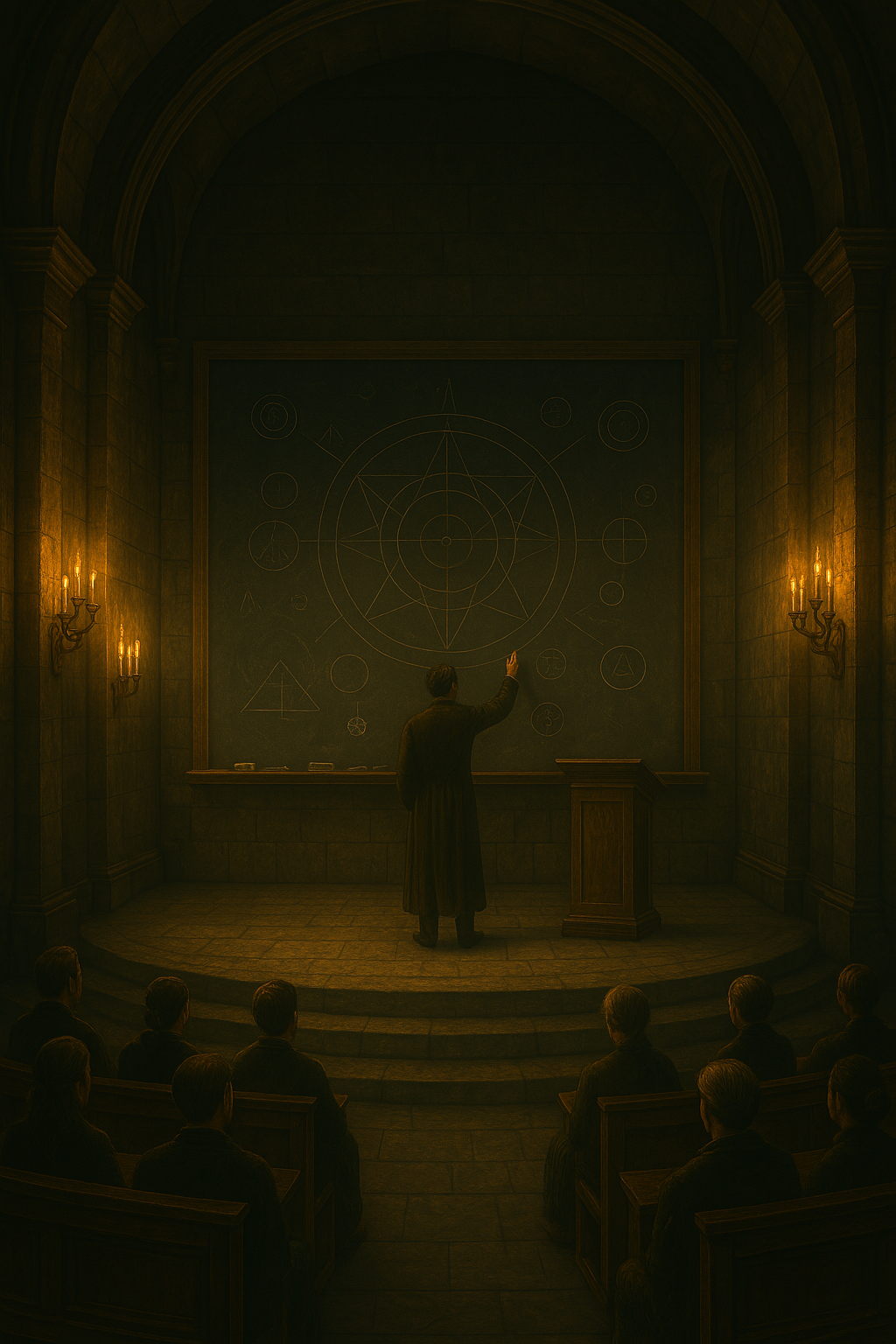
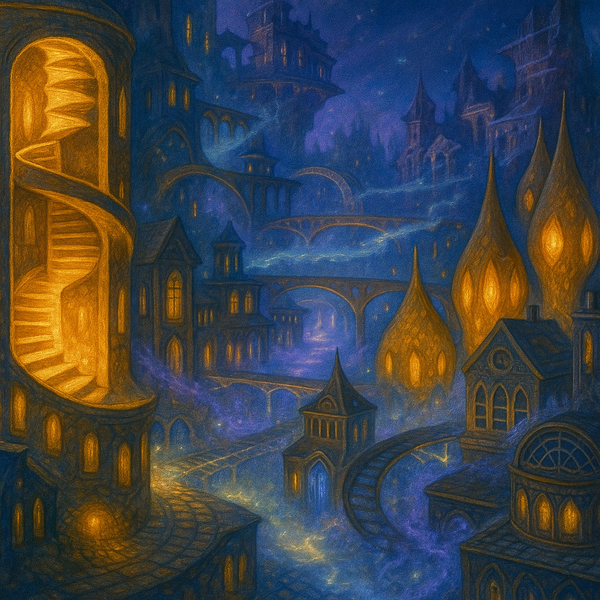
They approached the lecture hall in silence. From the top of the tower, the miniature city stretched out before them—an intricate lattice of memory palaces, each humming with quiet significance. The Mage pointed toward one near the center, and it lit up—its miniature spires glowing faintly, as if acknowledging the selection.
"You've been here before," the Mage said. "Not just in dreams. It's time you saw it for what it is."
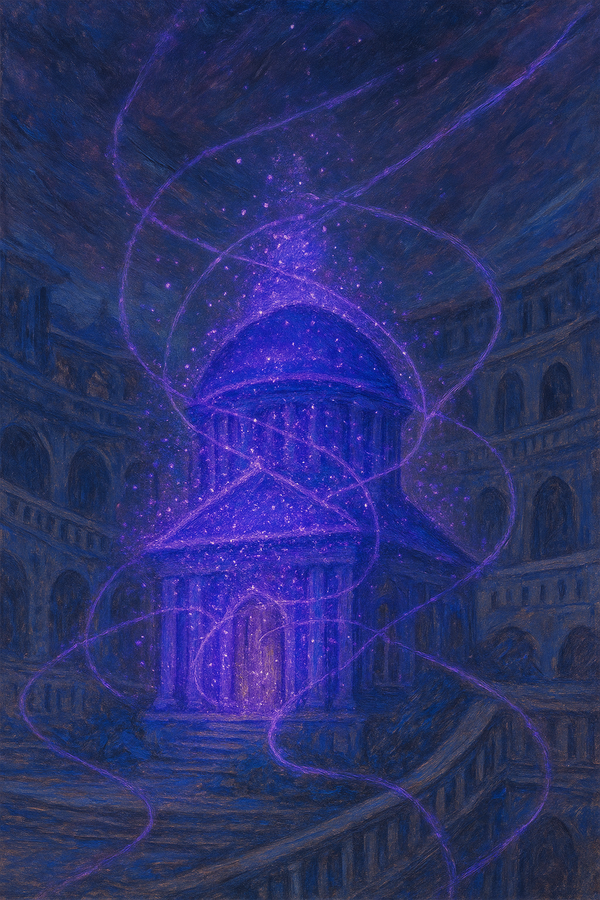
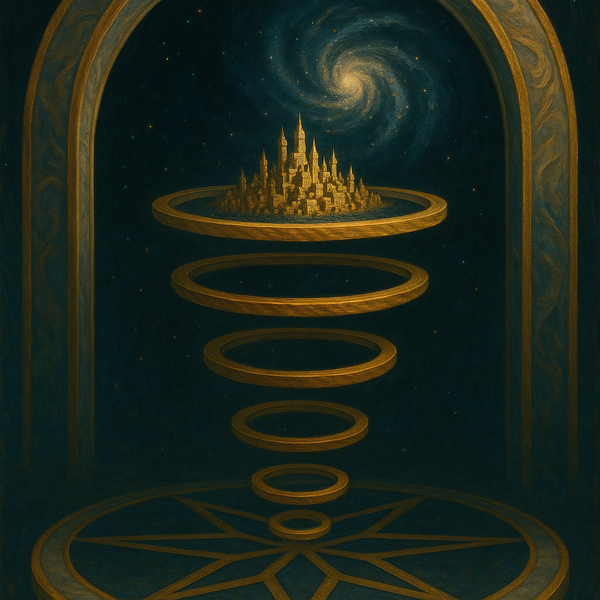
He extended his hand and traced a precise gesture in the air. A faint glow shimmered in response. From a nearby archway, an eight-pointed star ignited—soft, golden, and geometric. It pulsed once, then opened into a swirling gateway. Through the archway, the lecture hall waited. They stepped inside in silence. The hall was just as it had been: vaulted ceilings, spiral balconies, and tiered rows of stone benches etched with symbols Dæmon almost recognized. The lecturer stood at the center, robes drifting slightly as if stirred by a breeze that didn't exist.
"Prediction loops inward. The mind does not only predict the world—it predicts its own predictions. And sometimes, it becomes trapped."
The lecturer's voice was identical. So was the timing. "Self-reinforcing loops. Narratives. Internal myths. We tell ourselves stories about the world… and then act as though they are true. Until they become true."
Dæmon froze mid-step.
"I've seen this one," Dæmon said, half-whispered. "It's like a rerun—or Déjà vu."
The Mage gave a soft hum. Not a yes, not a no.
"The Eye doesn't repeat—it responds. You didn't see the same thing. You triggered the same entry."
Dæmon frowned. "Triggered?"
"Memory here is conditional. Where you sit, what you feel, what you expect—all of it matters. The same place can hold a thousand responses. The difference is how you arrive."
"So it's... reactive memory?"
"It's not logic, not exactly. But there is structure. Patterns. Triggers. Even gesture-based controls, if you know them. Rituals instead of code. Symbols instead of syntax."
He paused, then added,
"But yes—it responds."
They descended a few steps. The lecturer had not moved.
"So if I came here in a different mood… or with different questions…"
"You'd see a different lecture. Even in the same seat."
"And this one?"
The Mage gestured toward the hall, where the lecturer had just begun to speak. It was the same line Dæmon remembered. Word for word.
"This one matches the moment. So it returns."
Dæmon folded his arms. "Feels lazy."
"Feelings, too, are part of the condition."
He grunted, but sat. The voice of the lecturer echoed through the chamber:
"Consider the evolution of stories..."
Dæmon's eyes narrowed. The sentence felt like bait. The Mage said nothing. Not yet.
The lecturer continued without pause.
"Stories do not begin as art. They begin as signal. A cry from a throat. A pattern drawn in ash. One mind reaching toward another with the shape of something it has seen."
The chalk moved. A line from one node to many.
"Every story is a prediction packaged for transmission. It carries not just what happened—but what to expect. What to fear. What to trust."
Dæmon shifted in his seat. "So stories are just… data?"
The hall flickered. Not the lights—the walls. A faint shimmer passed across the stone, as if the room had registered the question and was deciding what to do with it.
The lecturer paused—an unnatural pause, like a sentence restarting from a different root.
"Not data. Stories are compressed experience. Data doesn't change how you see. A story does."
Dæmon looked at the Mage. "Did the room just—"
"It adjusted," the Mage said quietly. "You pushed back. It pushed differently."
"I didn't push anything. I asked a question."
"Same thing here."
The Mage lifted his hand—two fingers, a slow arc. The torches along the walls dimmed. The chalkboard expanded, or the room contracted around it. The chalk hung in the air for a moment, then began to move of its own accord.
Dæmon watched, arms still folded, but leaning forward.
The board filled with a branching structure—small nodes multiplying into larger clusters, clusters wiring into networks, networks feeding into something that looked like a city seen from above.
"Scale the principle," the lecturer said, voice different now—less rehearsed, more direct. "One predictor guesses light levels. A network of them guesses a face. A mind guesses meaning. And when minds connect—through speech, through stories, through ritual—"
The chalk circled the city on the board.
"—they form something else. Not a metaphor. Not a system. A living cognitive tissue."
The phrase hung in the air like it had weight.
"Culture is the cortex of the superorganism."
Dæmon's arms unfolded. He didn't decide to do it—they just moved.
"Every ritual you perform without thinking—greeting a stranger, following a recipe, honoring the dead—these are the firings of the collective mind. You don't need to understand the system to be essential to it."
Dæmon felt something settle in his chest—not agreement, not resistance, but recognition. The way you recognize a city from above after walking its streets blind.
He opened his mouth. What came out wasn't sarcasm.
"If the mind predicts itself—what does it become?"
The room answered before the lecturer did.
The torches flared. The chalk spun. A spiral appeared on the board, drawn from the outside in—the same spiral he'd seen in fragments before, across books and boards and half-remembered dreams. The lecturer stepped aside, and for a moment, the board was the only voice in the room.
Then, softly:
"A mind that predicts itself is no longer merely thinking. It is watching itself think."
The spiral deepened.
"It anticipates its own reactions. It second-guesses its own guesses. It builds a model of the self—and then responds to the model as though it were the self."
Dæmon's breath slowed.
"This is not a flaw. This is how agency begins. A system that cannot model itself cannot choose. It can only react."
"But a system that models only itself—"
The spiral collapsed to a point.
"—loses the world."
Silence.
Not the silence of pause. The silence of arrival.
Dæmon sat with it. The hall held still around him—not frozen, but waiting, the way a system waits when the right input has been received and the next output hasn't formed yet.
The Mage was watching him. He'd been watching the whole time. Not the lecturer, not the board—Dæmon.
"That's enough for one visit," the Mage said.
Dæmon didn't argue. He didn't have a comeback. He was looking at the chalkboard—at the spiral now fading back into the chalk dust and half-erased symbols that filled the rest of the board. One among many. This lecture's argument already becoming residue, settling into the surface alongside everything else the hall had ever taught.
He stood. The bench was warmer than it should have been.
"It knew what I was going to ask," he said. Not a question.
"It knew what you were ready to hear," the Mage replied. "Those aren't always the same thing."
They climbed the steps toward the archway. The hall dimmed behind them—not going dark, but going quiet, the way a room goes quiet when the conversation that mattered has ended and what remains is just settling.
At the top of the stairs, Dæmon stopped.
"Next time I come back—will it be the same?"
"It won't be," the Mage said. "You won't be."
Dæmon looked back once. The lecturer was still there—robes drifting, chalk in hand, facing an empty hall with the patience of something that had all the time in any world.
He turned and walked through the archway. The golden star flickered once behind him, then folded shut.